
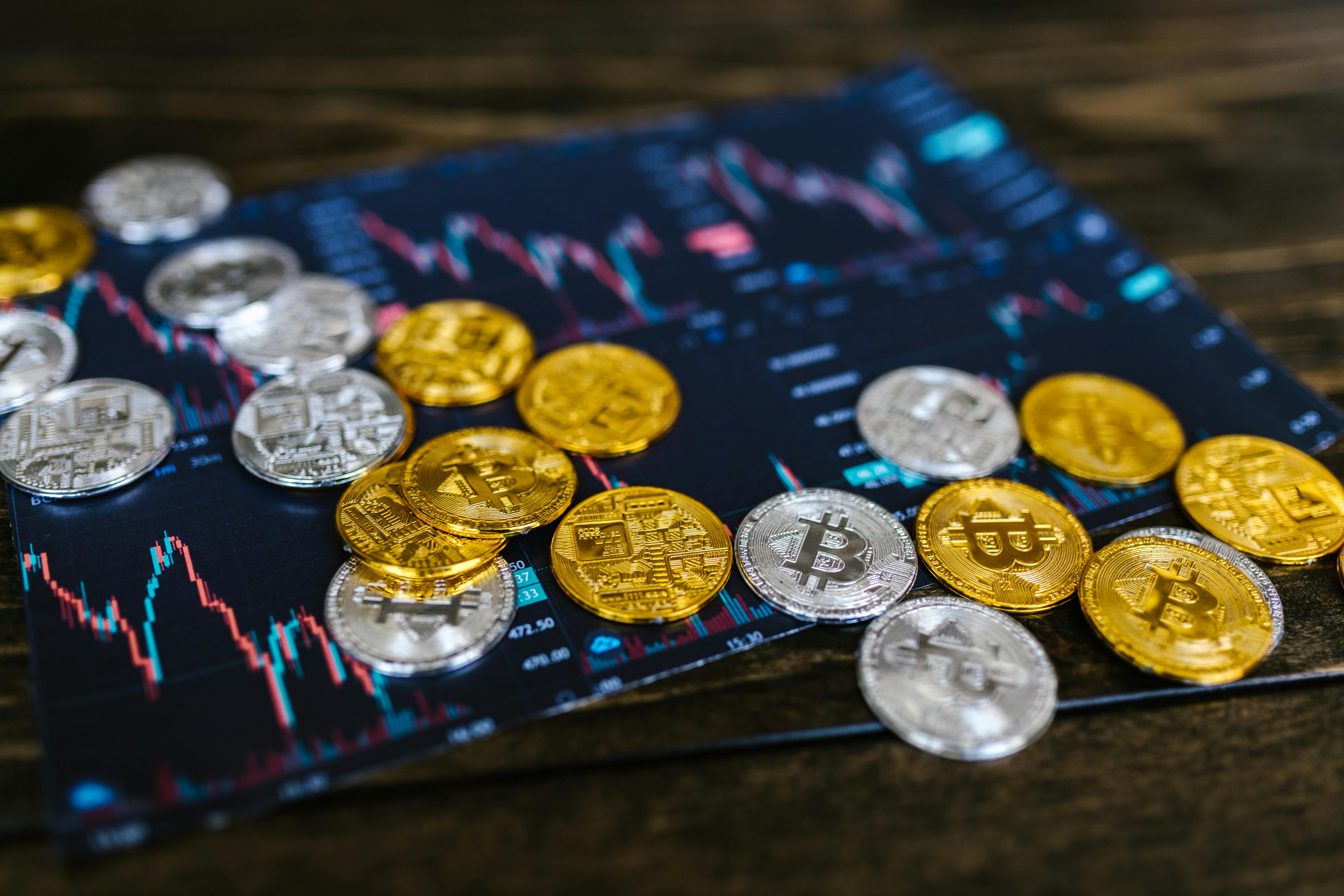
Uncover Altcoins Cost 2026: Compare top buys, analyze ROI potential, and navigate the US crypto market to maximize your next-gen investments. Expert strategies for savvy investors.
💰 Secure Top Deal: Go straight to the offer →
📍 More from this category: Altcoins – All Articles
Introduction: The Real Story Behind Altcoins Cost 2026
Best Altcoins 2026: Ultimate Comparison →
The year is 2026, and the digital asset landscape has matured, yet the core challenge for investors remains: identifying altcoins with explosive growth potential while understanding their true "cost." Beyond the sticker price, savvy investors in the United States recognize that maximizing ROI in the fast-evolving crypto space demands a deep dive into ecosystem health, utility, regulatory headwinds, and the hidden costs of participation. As institutional capital continues its steady flow into the sector and Web3 technologies reshape industries, distinguishing between fleeting hype and foundational innovation is more critical than ever. This comprehensive guide from CRYPTO NXT GEN cuts through the noise, offering an expert analysis of altcoins cost 2026, comparing top buys, and arming you with the strategies to optimize your portfolio for peak returns.
Deep Dive: Backgrounds, Facts, & US Market Data
By 2026, the US crypto market has solidified its position as a global leader, albeit one still navigating a complex regulatory patchwork. The post-halving cycles of Bitcoin have historically set the stage for altcoin rallies, and the market has seen several such transitions, leading to a more discerning investor base. Key factors influencing altcoins cost 2026 extend far beyond simple supply and demand dynamics:
- Regulatory Clarity (or Lack Thereof): The US Securities and Exchange Commission (SEC), Commodity Futures Trading Commission (CFTC), and other federal agencies have, by 2026, provided some level of guidance, though ambiguities persist. Projects with clear regulatory pathways or those proactively engaging with compliance frameworks often command a premium, as they mitigate significant operational risks. States like Wyoming, Texas, and New York continue to pioneer localized frameworks, influencing project domicile and investor confidence.
- Technological Innovation Cycles: The crypto industry moves at light speed. By 2026, narratives such as Artificial Intelligence (AI) integration, Decentralized Physical Infrastructure Networks (DePIN), Real World Asset (RWA) tokenization, and modular blockchain architectures have moved from nascent concepts to established sectors. Altcoins that are leading these trends, demonstrating tangible product-market fit and robust development, naturally attract higher valuations.
- Institutional Adoption & Liquidity: Major US financial institutions, pension funds, and wealth managers have significantly increased their exposure to digital assets. This institutional interest provides deeper liquidity, greater market stability, and often, a higher floor for established altcoins. The availability of regulated investment products (ETFs, ETPs) for a wider array of altcoins has also broadened access for retail investors, impacting overall market capitalization and perceived value.
- Macroeconomic Environment: Global economic conditions, inflation rates, interest rate policies from the Federal Reserve, and geopolitical stability continue to influence investor appetite for risk assets like altcoins. A more stable, growth-oriented macroeconomic outlook generally favors higher altcoin valuations.
- Community & Ecosystem Health: A vibrant, engaged developer community and a growing ecosystem of dApps, users, and partnerships are non-negotiable for long-term altcoin success. Metrics like Total Value Locked (TVL) in DeFi, active user addresses, developer activity on GitHub, and social sentiment provide crucial insights into a project's vitality and potential for sustained growth, which in turn influences its "cost" in terms of future value.
Understanding these underlying currents is paramount for any US investor seeking to navigate the altcoin market effectively in 2026. The "cost" isn't just the entry price; it's the sum of these factors determining future potential and risk.
Expert Analysis & Industry Insights
From the vantage point of CRYPTO NXT GEN, the landscape of altcoins cost 2026 is less about chasing the cheapest token and more about discerning intrinsic value and long-term utility. Many investors fall into the trap of focusing solely on a token's dollar price, mistakenly believing a lower price per token equates to a cheaper investment. This overlooks market capitalization and the project's fundamental strength.
Our expert analysis reveals several key nuances others often miss:
- The True Cost of Participation: Beyond the initial purchase price, consider transaction fees (gas fees on Ethereum, for example, or network fees on other chains), staking lock-up periods and potential impermanent loss in DeFi, and the opportunity cost of capital tied up in less performant assets. These factors significantly impact your realized ROI. Projects on highly scalable, low-fee layer-2 solutions or alternative layer-1s often offer a lower "total cost of ownership," making them attractive for frequent transactions or smaller capital deployments.
- Tokenomics as a Value Indicator: The tokenomics—the economic model governing a cryptocurrency—are crucial. Is the supply inflationary or deflationary? What are the vesting schedules for team and early investors? How are tokens distributed and used within the ecosystem? Strong tokenomics that align incentives for long-term holding and network participation, rather than quick flips, are characteristic of robust projects. A well-designed tokenomic model can significantly de-risk your investment and enhance long-term value, effectively reducing the "cost" of holding.
- The Narrative Shift: From Speculation to Utility: While speculative fervor will always exist, the 2026 market increasingly rewards projects with real-world utility and adoption. Tokens powering essential infrastructure (e.g., decentralized storage, computing, identity), facilitating tangible financial services (DeFi), or enabling new forms of digital ownership (NFTs with utility) are gaining prominence. The "cost" of these tokens reflects their proven or highly probable future utility rather than just speculative demand.
- Interoperability and Modularity: The future of crypto is multi-chain. Altcoins that facilitate seamless communication and asset transfer between different blockchains, or those built on modular architectures, are poised for significant growth. Their ability to integrate into a broader Web3 ecosystem reduces friction and enhances user experience, making them indispensable components of the future digital economy.
In essence, optimizing your altcoin investments in 2026 means adopting a holistic view of "cost"—one that encompasses not just the price tag, but the underlying technology, ecosystem strength, regulatory resilience, and the long-term economic model of the project. This deep understanding is what separates successful investors from those simply chasing the latest pump.
💰 Ultimate Comparison: The Best Options (HIGH CPC SECTION)
Navigating the altcoin market in 2026 requires a discerning eye, focusing on projects with robust fundamentals, clear utility, and significant growth catalysts. Here, we compare two distinct profiles that exemplify high-potential investments for US investors aiming to maximize ROI, considering their true "cost" and value proposition.
Premium Pick: Arbitrum (ARB)
Overview: Arbitrum has firmly established itself as a leading Layer-2 scaling solution for Ethereum, addressing the critical issues of high gas fees and network congestion. By 2026, its ecosystem has matured significantly, hosting a vast array of DeFi protocols, dApps, and NFT projects. Its optimistic rollup technology provides a secure, Ethereum-compatible environment that processes transactions off-chain, bundling them into a single transaction on the Ethereum mainnet, drastically reducing costs and increasing throughput.
Why it's a Premium Pick: Arbitrum's strength lies in its direct alignment with Ethereum's long-term vision. As Ethereum continues its evolution (e.g., through further upgrades post-Merge), solutions like Arbitrum become increasingly vital infrastructure. Its robust developer tooling, strong community support, and the network effect of its growing dApp ecosystem position it as a foundational piece of the Web3 landscape. For investors, ARB represents a play on the continued growth and scaling of the dominant smart contract platform, offering a relatively lower risk profile compared to newer, unproven L1s.
Potential 2026 Catalysts: Continued migration of major DeFi protocols and enterprise solutions to Arbitrum, further advancements in rollup technology (e.g., integration with "Danksharding" on Ethereum), expansion of its gaming and NFT sectors, and strategic partnerships with traditional tech firms exploring Web3. Regulatory clarity around L2s in the US would also be a significant tailwind.
Value Pick: Render (RNDR)
Overview: Render Network is a decentralized GPU rendering platform that connects users needing rendering power (e.g., for AI, metaverse, VFX, motion graphics) with providers offering their idle GPUs. By 2026, the demand for decentralized computing power, particularly for AI model training and complex metaverse environments, has surged exponentially. RNDR tokens are the utility token used to pay for rendering services on the network.
Why it's a Value Pick: Render taps into two of the most powerful narratives of the decade: Artificial Intelligence and the Metaverse/Spatial Computing. Its decentralized model offers a cost-effective, scalable, and censorship-resistant alternative to centralized cloud rendering services. As AI development accelerates and immersive digital experiences become more prevalent, the demand for RNDR's core service is projected to grow significantly. For investors, RNDR represents an opportunity to gain exposure to the foundational infrastructure powering the next generation of digital content and AI innovation at a potentially lower market cap than established giants.
Potential 2026 Catalysts: Massive adoption by AI startups and research labs, integration into major game engines and metaverse platforms, expansion of its GPU provider network, strategic partnerships with hardware manufacturers, and potential for new use cases beyond rendering (e.g., general decentralized compute for AI inference). The increasing energy efficiency of GPU mining/rendering also enhances its green credentials, appealing to ESG-conscious investors.
| Feature | Arbitrum (ARB) - Premium Pick | Render (RNDR) - Value Pick |
|---|---|---|
| Primary Use Case | Ethereum Layer-2 Scaling Solution (DeFi, dApps, NFTs) | Decentralized GPU Rendering & AI Compute |
| Key Strengths | High security (Ethereum-level), robust ecosystem, low transaction fees, strong developer adoption, established market position. | Addresses critical AI/Metaverse compute needs, decentralized and cost-effective, strong real-world utility, growing demand in key tech sectors. |
| Potential 2026 Catalysts | Continued Ethereum scaling, enterprise adoption, regulatory clarity for L2s, expansion into gaming. | AI boom, metaverse growth, new compute use cases, strategic industry partnerships, GPU network expansion. |
| Risk Profile | Medium-Low: Tied to Ethereum's success, competition from other L2s, potential for L1 scalability to reduce L2 necessity (long-term). | Medium-High: Competition from centralized cloud providers, reliance on AI/Metaverse adoption, potential for technological shifts in compute. |
| Cost Metrics (Hypothetical 2026) | Entry Point Considerations: Reflects strong market cap. Transaction Fees: Very low (fractions of a dollar per transaction). Staking Rewards: Potential for governance staking or liquidity provision rewards. Tokenomics Impact: Inflationary but offset by network growth and utility. | Entry Point Considerations: Lower market cap, higher growth potential. Transaction Fees: Network fees for compute services. Staking Rewards: Potential for node operators and liquidity providers. Tokenomics Impact: Utility-driven demand tied to compute usage. |
| ROI Potential | Solid, consistent growth driven by foundational utility and network effect. | Potentially higher, more volatile growth driven by emerging tech trends and market cap expansion. |
Future Outlook & 2026 Trends
Looking ahead to the remainder of 2026 and beyond, several overarching trends will continue to shape the altcoins cost landscape and dictate where smart money flows. For US investors, understanding these shifts is paramount:
- The AI x Crypto Convergence: This isn't just a buzzword; it's a fundamental shift. Decentralized AI networks, verifiable AI computations, and AI-powered trading or data analysis tools will drive demand for specific altcoins. Projects that provide the infrastructure, data, or compute power for AI will see significant value appreciation.
- Real-World Asset (RWA) Tokenization: The tokenization of tangible assets—from real estate and commodities to intellectual property and fine art—is gaining undeniable traction. This trend bridges traditional finance with blockchain, creating massive new markets and liquidity. Altcoins facilitating RWA tokenization, legal compliance, or fractional ownership will be prime beneficiaries.
- Decentralized Physical Infrastructure Networks (DePIN): Projects building out decentralized networks for everything from wireless connectivity (Helium) to energy grids and storage will continue to expand. DePIN altcoins represent a direct investment in the infrastructure of a more distributed, resilient future.
- Regulatory Maturation: While full clarity might still be a distant dream, 2026 should see further refinement of regulatory frameworks in the US and globally. Altcoins that are proactive in compliance, or those operating in clearly defined regulatory buckets (e.g., utility tokens for specific services), will be de-risked and become more attractive to institutional capital.
- Enhanced User Experience (UX) and Abstraction: The "next gen" of crypto will be less about complex seed phrases and gas fees, and more about seamless, intuitive user experiences. Projects focusing on account abstraction, simplified onboarding, and making Web3 invisible will unlock mass adoption, driving value to their underlying tokens.
- Sustainability and ESG Focus: Environmental, Social, and Governance (ESG) considerations are no longer optional. Projects demonstrating energy efficiency, sustainable practices, or contributing to social good will increasingly attract capital, especially from institutional investors with ESG mandates.
The "cost" of altcoins in 2026 will increasingly reflect their alignment with these powerful, long-term trends. Investors who position themselves in projects at the forefront of these shifts, rather than chasing yesterday's narratives, are best prepared to maximize their ROI.
Conclusion
Successfully navigating the altcoins cost 2026 environment requires more than just identifying promising projects; it demands a sophisticated understanding of market dynamics, technological innovation, and the true cost of investment. As the US crypto market matures, the focus shifts from speculative bets to fundamental value, real-world utility, and robust tokenomics. By meticulously researching projects like Arbitrum and Render, which represent critical infrastructure for Ethereum scaling and the burgeoning AI/Metaverse sectors, investors can strategically position their portfolios.
Remember, maximizing your ROI isn't solely about the initial entry price, but about the total cost of ownership, the project's long-term viability, and its alignment with future-proof trends. Diversification, continuous education, and a keen eye on regulatory developments are your best allies. Stay informed with CRYPTO NXT GEN to make the most intelligent, high-conviction decisions in the ever-evolving world of digital assets.
👉 More News: Altcoins Cost 2026: Analysis for Top ROI Investments