
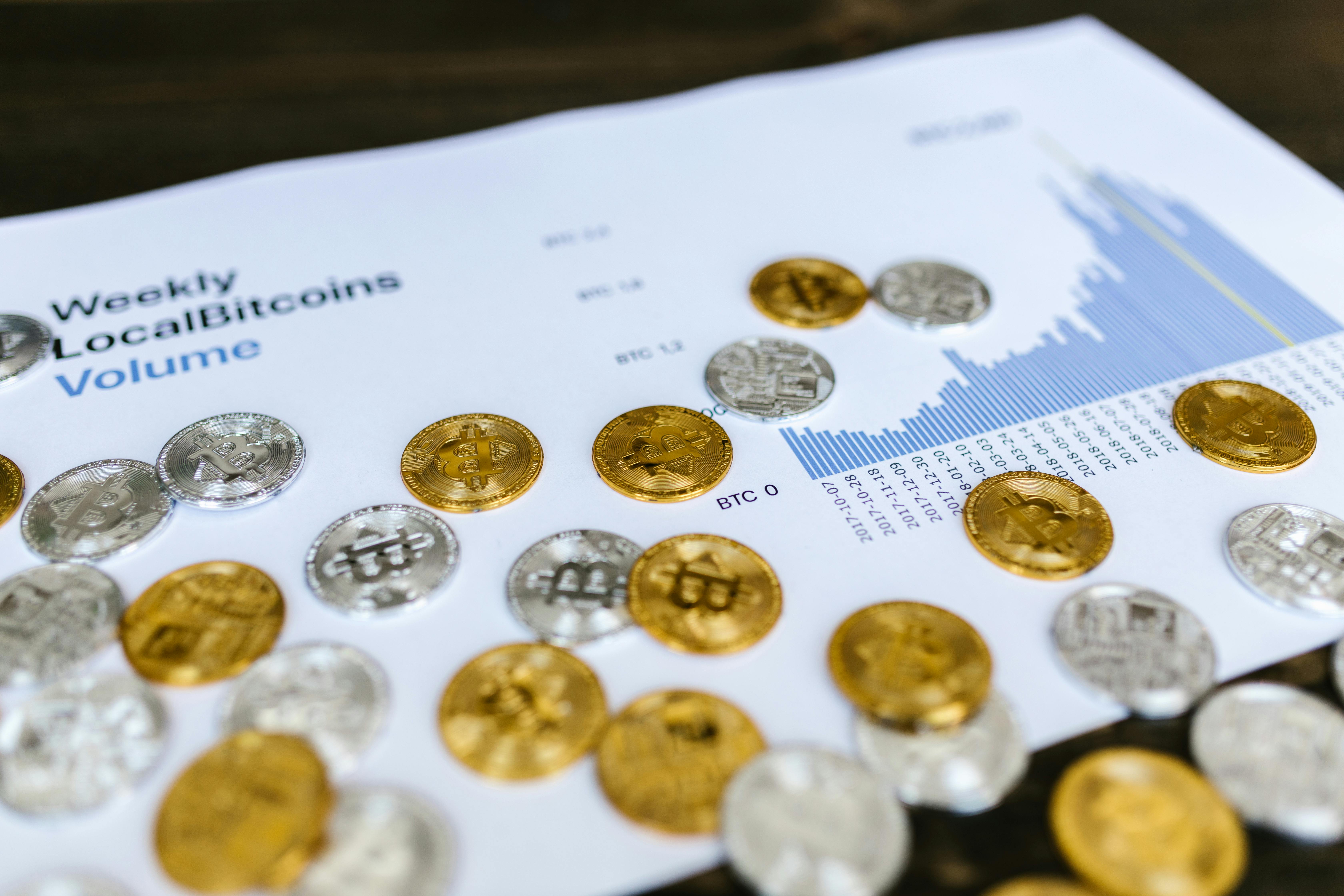
In 2026, AI-driven algorithmic trading bots and quantum-resistant strategies are no longer futuristic concepts but essential tools for maximum profitability in crypto. Explore the best automated crypto trading platforms, compare advanced DeFi bots, and discover how to leverage machine learning for unparalleled market insights and secure, high-frequency trading.
Introduction to the Topic
The year is 2026, and the crypto markets are a relentless, high-velocity arena where every millisecond and every data point can mean the difference between monumental gains and devastating losses. Gone are the days when simple manual trades or basic scripts could consistently outperform the market. Today, the competitive edge belongs to those who harness the power of artificial intelligence (AI) and cutting-edge algorithmic strategies, further fortified by quantum-resistant security protocols. As institutional capital pours into decentralized finance (DeFi) and new tokenized asset classes emerge daily, individual traders and sophisticated funds alike are turning to intelligent automation to navigate the labyrinthine complexities, execute high-frequency trades, and uncover arbitrage opportunities that human eyes simply cannot perceive.
This isn't just about speed; it's about intelligence, adaptability, and foresight. AI-driven bots are transforming crypto trading from a reactive gamble into a proactive, data-informed science. From predictive analytics that anticipate market shifts to adaptive risk management frameworks that protect capital, these digital maestros are indispensable. Furthermore, with the looming threat of quantum computing potentially undermining current cryptographic standards, forward-thinking platforms are integrating quantum-resistant algorithms, ensuring the integrity and security of high-value trading operations against future cyber threats. Welcome to the future of crypto trading – a landscape dominated by intelligent machines and impenetrable security, where your strategy must evolve or be left behind.
Backgrounds & Facts
The journey to AI-driven crypto trading began modestly in the late 2010s with basic arbitrage bots and simple trend-following algorithms. However, the exponential growth in blockchain technology, coupled with advancements in machine learning (ML) and big data processing, has propelled these tools into a new era. By 2026, AI is not merely an enhancement; it's the core engine for competitive trading. The sheer volume and velocity of data generated across hundreds of exchanges, countless DeFi protocols, and a myriad of Layer 2 solutions make manual analysis impossible. AI algorithms excel here, processing terabytes of market data, social sentiment, on-chain metrics, and macroeconomic indicators in real-time.
Key facts underpinning this shift:
- Market Complexity: The proliferation of new assets, derivatives, perpetual swaps, options, and structured products on both centralized (CEX) and decentralized exchanges (DEX) has created an intricate web of interdependencies that only AI can effectively model.
- Speed and Latency: Micro-arbitrage opportunities and high-frequency trading (HFT) demand execution speeds measured in microseconds. AI-powered bots, often co-located with exchange servers or optimized for minimal latency on Layer 2 networks, are engineered for this speed.
- Predictive Analytics: Advanced ML models, including deep learning and neural networks, can identify subtle patterns and correlations in market data that precede significant price movements, offering a predictive edge over traditional technical analysis.
- Sentiment Analysis: Natural Language Processing (NLP) AI scans vast amounts of news, social media, and forum discussions to gauge market sentiment, providing early warnings or confirmations of shifts in investor psychology.
- Risk Management: AI systems can dynamically adjust portfolio allocations, implement stop-loss orders, and manage leverage based on real-time volatility and predefined risk parameters, significantly reducing human error and emotional trading.
- The Quantum Threat & Quantum-Resistant Algorithms: While full-scale quantum computers capable of breaking current cryptographic standards (like RSA or ECC) are still a few years away, the foresight to implement post-quantum cryptography (PQC) in high-security financial systems is paramount. By 2026, several leading trading platforms are integrating quantum-resistant algorithms (e.g., lattice-based cryptography, hash-based signatures) to secure private keys, transaction signing, and data transmission. This isn't about quantum trading, but about future-proofing the security of your trading infrastructure against a potential 'quantum apocalypse' that could compromise existing digital security.
These developments signify a paradigm shift, making intelligent automation and robust security not just desirable, but utterly essential for any serious crypto trader.
Expert Opinion / Analysis
“The days of relying solely on gut feelings and chart patterns are long gone,” states Dr. Anya Sharma, Head of Quant Strategies at NexGen Capital, a leading institutional crypto fund. “In 2026, if you’re not leveraging AI for market analysis, strategy backtesting, and execution, you’re simply leaving money on the table – or worse, becoming exit liquidity for those who are.”
According to Dr. Sharma, the sophistication of AI in crypto trading now extends beyond simple rule-based systems. “We’re seeing increasingly complex models, such as reinforcement learning agents that adapt and optimize their strategies in real-time based on market feedback, and generative adversarial networks (GANs) used for synthetic data generation to train robust predictive models without over-fitting to historical data.”
The landscape of AI-driven bots is diverse, each designed for specific market conditions and objectives:
- Market Making Bots: These sophisticated algorithms continuously place limit buy and sell orders around the current market price, profiting from the bid-ask spread. They require high liquidity and fast execution, often integrated directly with exchange APIs. Modern market makers use AI to dynamically adjust spreads, inventory levels, and order sizes based on volatility and order book depth.
- Arbitrage Bots (Inter-exchange & Intra-exchange): These bots exploit fleeting price discrepancies across different exchanges or within the same exchange (e.g., triangular arbitrage). AI enhances these bots by identifying more complex arbitrage loops, predicting potential price movements, and optimizing execution to minimize slippage.
- Trend Following & Momentum Bots: Utilizing AI to identify and capitalize on market trends, these bots are smarter than their predecessors. They employ machine learning to filter out noise, confirm trend strength, and predict trend reversals with greater accuracy, dynamically adjusting position sizes.
- Sentiment-Driven Bots: Leveraging advanced NLP, these bots monitor global news feeds, social media platforms (X, Farcaster, Lens Protocol), and on-chain analytics (whale movements, stablecoin flows) to gauge market sentiment and execute trades based on perceived shifts in investor mood.
- DeFi Yield Optimization Bots: These are increasingly popular, automating strategies like yield farming, liquidity provision, and lending across various DeFi protocols on Layer 1 and Layer 2 solutions. AI helps identify the highest APRs, manage impermanent loss risk, and automatically rebalance portfolios for optimal returns, often integrating with gas-efficient L2s for cost-effective operations.
“The biggest challenge, beyond the technical implementation, is data quality and preventing over-optimization,” notes Sharma. “You need clean, reliable data to train your models, and robust backtesting methodologies to ensure your strategies aren’t just fitting historical noise. Furthermore, the integration of quantum-resistant cryptography into our trading infrastructure is not just a 'nice-to-have' but a critical security layer for protecting our proprietary algorithms and high-value transactions against future threats.”
💰 Best Options in Comparison (VERY IMPORTANT)
Navigating the burgeoning market of AI-driven crypto trading platforms can be daunting. As of 2026, several platforms stand out for their innovation, performance, and commitment to security. Here’s a comparison of top contenders, focusing on their unique features, target users, and the integration of advanced security measures like quantum-resistant capabilities:
-
AlgoForge Pro
Overview: A premium, institutional-grade platform offering unparalleled customization for advanced traders and quantitative funds. AlgoForge Pro provides a robust environment for developing, backtesting, and deploying complex AI/ML strategies. It boasts a marketplace for pre-built, audited algorithms and integrates with major CEXs and leading L2 DEXs. Its core infrastructure is designed with forward-looking security, offering optional quantum-resistant modules for data encryption and transaction signing.
Key Features: Advanced ML model integration (TensorFlow, PyTorch), real-time data feeds, multi-asset class support (spot, futures, options, DeFi derivatives), extensive backtesting engine, low-latency execution, API access to over 50 exchanges, integrated quantum-resistant cryptography options.
Best For: Quantitative hedge funds, professional traders, experienced developers, and institutions seeking highly customizable and secure algorithmic solutions.
-
DeFiSmartBot v3.0
Overview: The leading platform for automated decentralized finance (DeFi) strategies. DeFiSmartBot v3.0 specializes in optimizing yield farming, liquidity provision, concentrated liquidity management, and lending across a multitude of Layer 1 and Layer 2 protocols (e.g., Arbitrum, Optimism, zkSync Era, StarkNet). Its AI continuously monitors gas fees, impermanent loss, and APRs to rebalance portfolios for maximum efficiency and profit. Features enhanced smart contract auditing and optional post-quantum secure vaults for asset storage.
Key Features: AI-driven yield optimization, automated rebalancing, impermanent loss mitigation, cross-chain strategy deployment, integrated L2 gas fee optimization, comprehensive risk analytics for DeFi protocols, smart contract audit integration, PQC-secured asset vaults.
Best For: DeFi power users, yield farmers, institutional investors looking for automated DeFi exposure, and those prioritizing secure, efficient decentralized strategies.
-
QuantPulse AI
Overview: Aimed at intermediate to advanced retail traders, QuantPulse AI democratizes access to sophisticated AI trading. It offers a user-friendly interface with a selection of pre-optimized, AI-driven strategies for various market conditions (e.g., momentum, mean reversion, arbitrage). While less customizable than AlgoForge Pro, it provides robust performance with transparent backtesting results. QuantPulse AI emphasizes user data privacy and employs standard but strong encryption, with plans to integrate quantum-resistant protocols by late 2026.
Key Features: Intuitive UI, library of pre-built AI strategies, one-click bot deployment, real-time performance monitoring, simulated trading environment, integrated market sentiment analysis, active community support.
Best For: Intermediate crypto traders, those new to algorithmic trading but familiar with crypto, and users seeking powerful yet accessible AI tools.
-
CryptoSentinel AI
Overview: As its name suggests, CryptoSentinel AI prioritizes security and advanced risk management alongside profit generation. This platform excels in providing AI-driven predictive risk analysis, smart stop-loss mechanisms, and portfolio protection strategies. It integrates deeply with on-chain analytics to detect potential rug pulls or protocol vulnerabilities in DeFi. CryptoSentinel AI is a pioneer in implementing quantum-resistant communication protocols for all API interactions and user data storage, setting a new standard for security.
Key Features: AI-powered risk assessment, dynamic stop-loss & take-profit, on-chain anomaly detection, portfolio health monitoring, real-time alerts, fully quantum-resistant communication and data storage, multi-exchange and DeFi integration.
Best For: Risk-averse traders, institutions requiring stringent security, and users who want comprehensive AI-driven protection for their crypto assets and strategies.
Here's a detailed comparison table:
| Platform | Key Features | Target User | Pricing Model | Quantum-Resistant Features | Best For |
|---|---|---|---|---|---|
| AlgoForge Pro | Advanced ML integration, multi-asset support, extensive backtesting, low-latency execution. | Quant funds, professional traders, developers. | Subscription (tiered), performance fees. | Optional PQC modules for data/transaction security. | Highly customizable, secure institutional strategies. |
| DeFiSmartBot v3.0 | AI-driven yield optimization, automated rebalancing, cross-chain, L2 gas optimization. | DeFi power users, yield farmers, institutions. | Subscription (based on AUM), protocol fees. | PQC-secured asset vaults, enhanced smart contract audits. | Automated, secure, and efficient DeFi strategy execution. |
| QuantPulse AI | User-friendly UI, pre-built AI strategies, one-click deployment, real-time monitoring. | Intermediate retail traders, algorithmic trading beginners. | Monthly/annual subscription. | Standard strong encryption, PQC integration planned for late 2026. | Accessible, powerful AI for growing traders. |
| CryptoSentinel AI | AI-powered risk assessment, dynamic stop-loss, on-chain anomaly detection, portfolio health. | Risk-averse traders, institutions, security-focused users. | Subscription (tiered by features/AUM). | Full quantum-resistant communication and data storage. | Comprehensive AI-driven security and risk mitigation. |
Outlook & Trends
The trajectory for AI in crypto trading is steeply upward, with several key trends shaping its evolution towards the end of the decade:
- Explainable AI (XAI): As AI models become more complex, the demand for transparency will grow. XAI will allow traders to understand *why* a bot made a particular decision, fostering trust and enabling better human oversight, crucial for regulatory compliance.
- Hyper-Personalized Strategies: AI will move beyond generic strategies to create highly personalized trading bots that adapt to individual risk tolerance, capital size, preferred asset classes, and even psychological biases, constantly learning and refining.
- Integration with Tokenized Real-World Assets (RWAs): As RWAs become a dominant force in crypto, AI bots will be pivotal in pricing, trading, and managing these complex, illiquid assets, bridging traditional finance with blockchain.
- Regulatory Scrutiny and Compliance Bots: Governments worldwide are increasing their focus on AI ethics and financial market integrity. We'll see the rise of AI-powered compliance bots that monitor trading activities for market manipulation, insider trading, and adherence to evolving regulations.
- Federated Learning & Collaborative AI: Privacy-preserving AI techniques like federated learning will allow multiple trading entities to collaboratively train AI models without sharing raw data, creating more robust and intelligent systems while protecting proprietary information.
- Advanced Quantum-Resistant Cryptography (PQC) Adoption: While some platforms are already integrating PQC, it will become an industry standard for all high-value crypto trading platforms. This includes not just data at rest and in transit, but also potentially PQC-hardened smart contracts and digital signatures for on-chain transactions, providing an unparalleled layer of security against future quantum threats.
- AI-as-a-Service (AIaaS) for Trading: Smaller funds and individual traders will increasingly access sophisticated AI capabilities through subscription-based AIaaS models, lowering the barrier to entry for advanced strategies.
The future promises a symbiosis between human intuition and machine intelligence, where AI handles the heavy lifting of data analysis and high-speed execution, freeing traders to focus on strategic innovation and macro-level insights.
Conclusion
The year 2026 marks a pivotal moment in crypto trading, where the fusion of artificial intelligence and robust, quantum-resistant security isn't merely advantageous—it's imperative for survival and prosperity. The relentless pace, intricate complexity, and sheer volume of data in today's digital asset markets demand tools that transcend human capabilities. AI-driven algorithmic bots offer the precision, speed, and analytical depth required to uncover hidden opportunities, manage complex portfolios, and execute strategies with unprecedented efficiency.
Furthermore, the proactive adoption of quantum-resistant algorithms is not just a futuristic talking point but a critical shield, safeguarding your assets and strategies against the cryptographic vulnerabilities of tomorrow. As you consider your next move in the crypto arena, ask yourself: Are you equipped with the intelligence and security to truly compete? The platforms highlighted above represent the vanguard of this revolution, offering diverse solutions for every type of trader, from institutional giants to ambitious individuals.
Embrace the future of trading. Explore these cutting-edge AI platforms, understand their capabilities, and integrate the power of intelligent automation and impenetrable security into your strategy. Your journey to becoming a 2026 crypto trading powerhouse starts now – where algorithms empower profits and quantum-resistance secures your legacy.