
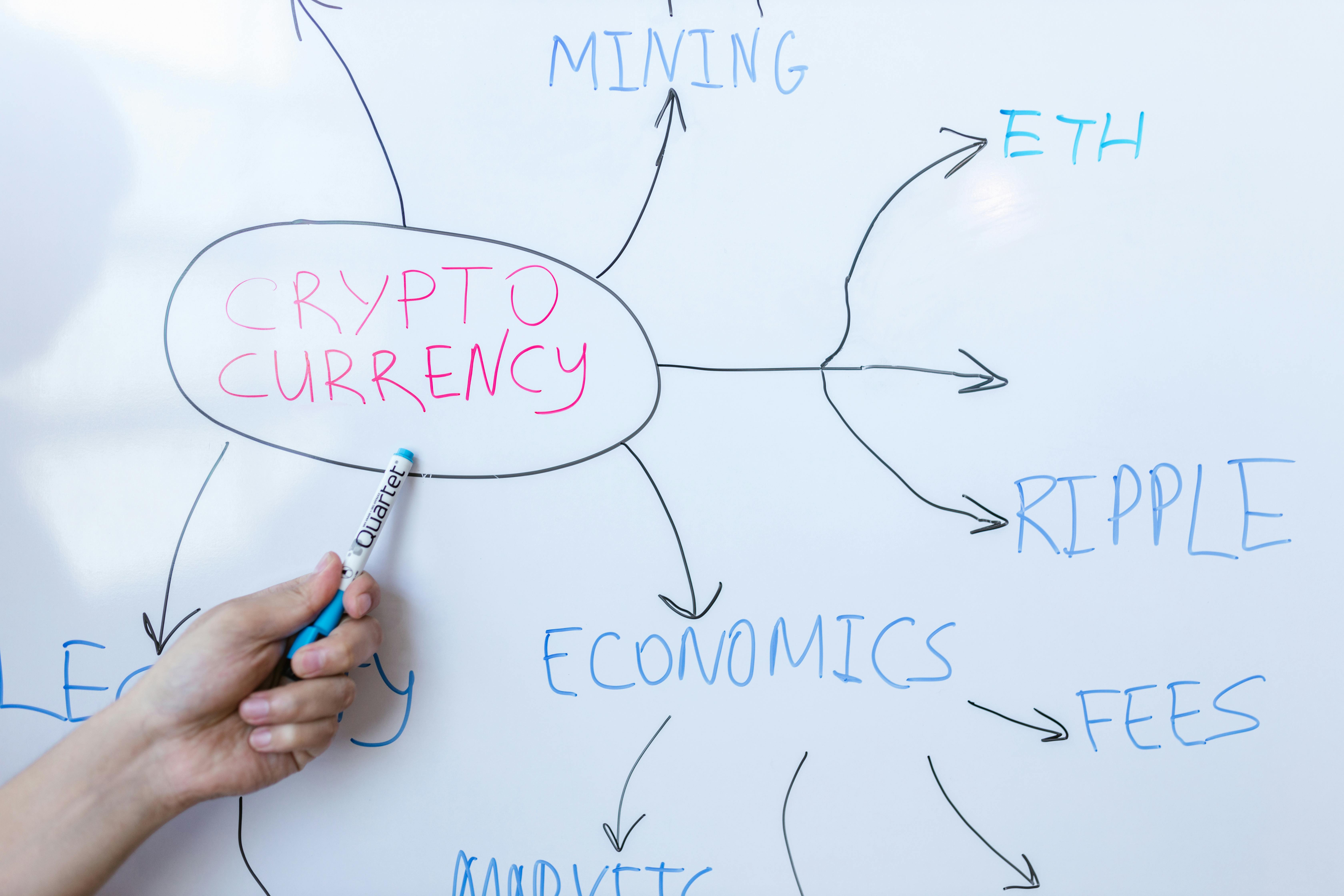
The year 2026 marks a pivotal shift in global finance as Real-World Asset (RWA) tokenization moves from niche concept to mainstream investment strategy. Discover how to capitalize on this trillion-dollar opportunity by understanding the top RWA platforms, comparing their features, and securing your future with fractional ownership, enhanced liquidity, and unparalleled access to high-value assets like real estate, private equity, and fine art. This comprehensive guide helps you choose the best tokenization solutions for your portfolio.
Introduction to the Topic
Welcome to 2026, where the once-futuristic promise of blockchain technology is now reshaping traditional finance at an unprecedented pace. While cryptocurrencies have paved the way, the true revolution lies in Real-World Asset (RWA) tokenization. Imagine owning a fractional share of a luxury Manhattan skyscraper, a rare Picasso painting, or even a portfolio of private credit loans – all managed with the transparency, efficiency, and security of blockchain. This isn't just a dream; it's the reality unfolding before our eyes, presenting a multi-trillion-dollar market opportunity for savvy investors.
For too long, high-value assets have been locked behind gates of illiquidity, high entry barriers, and opaque processes. RWA tokenization smashes these barriers, democratizing access to exclusive investment opportunities and injecting much-needed liquidity into stagnant markets. As global institutions, sovereign wealth funds, and sophisticated retail investors increasingly turn their gaze towards tokenized assets, understanding the landscape of leading RWA platforms is no longer optional – it's essential for anyone looking to optimize their investment portfolio and secure their financial future. Get ready to explore the platforms that are defining the next era of wealth creation.
Backgrounds & Facts
Real-World Assets (RWAs) encompass tangible and intangible assets with inherent value outside the digital realm. This includes real estate, commodities (gold, oil), private equity, debt instruments, fine art, intellectual property, and even carbon credits. Tokenization is the process of representing ownership or rights to these assets as digital tokens on a blockchain. Each token, often a security token, is programmed with specific rules governing its ownership, transferability, and compliance with regulatory frameworks.
The mechanics are straightforward yet powerful: a legal entity typically holds the underlying RWA, and its ownership is digitally represented by tokens issued on a blockchain. Smart contracts automate various processes, such as dividend distribution, voting rights, and transfer restrictions, ensuring transparency and reducing intermediaries. This drastically cuts down on administrative costs, processing times, and potential for fraud.
By 2026, the RWA tokenization market has exploded. Industry projections from institutions like Boston Consulting Group and JP Morgan now estimate the market size could reach over $16 trillion by 2030, with significant milestones already achieved this year. The drivers behind this exponential growth are manifold:
- Institutional Adoption: Major banks, asset managers, and sovereign funds are launching their own tokenization initiatives and actively investing in tokenized products.
- Regulatory Clarity: Jurisdictions globally are developing clearer legal and regulatory frameworks for digital securities, providing much-needed certainty for investors and issuers.
- Technological Advancements: More robust, scalable, and interoperable blockchain networks (Layer 1s, Layer 2s, and emerging Layer 3s) are making tokenization more efficient and secure.
- Investor Demand: A growing appetite for diversified portfolios, higher yields, and access to previously inaccessible alternative investments is fueling demand from both institutional and sophisticated retail investors.
- Enhanced Liquidity: Fractional ownership and 24/7 trading on digital asset exchanges significantly improve the liquidity of traditionally illiquid assets.
While challenges remain, particularly around global regulatory harmonization and oracle reliability for off-chain data, the momentum is undeniable. RWA tokenization is not just a trend; it's a foundational shift in how value is created, managed, and exchanged.
Expert Opinion / Analysis
“The transition to tokenized real-world assets represents the most significant evolution in financial markets since the advent of securitization,” states Dr. Alistair Finch, Head of Digital Asset Strategy at Nexus Capital Group. “In 2026, we’re seeing a critical inflection point where the digital asset space is maturing beyond speculative cryptocurrencies. Investors are now prioritizing tangible value, regulatory compliance, and predictable returns, which RWA tokenization inherently offers.”
Our analysis at cryptonxtgen.com confirms Dr. Finch’s perspective. The narrative has shifted from 'crypto for crypto's sake' to 'blockchain for real-world utility.' This maturation is attracting a wave of traditional finance players who previously viewed the space with skepticism. The ability to fractionalize ownership of high-value assets, from commercial real estate portfolios to rare earth minerals and even carbon credit offset projects, means that investment opportunities once reserved for ultra-high-net-worth individuals are now accessible to a broader pool of accredited investors.
Furthermore, the inherent transparency and auditability of blockchain technology are building trust. Every transaction, every ownership transfer, is immutably recorded, significantly reducing the potential for fraud and disputes. This level of verifiable authenticity is particularly appealing in markets like fine art or collectibles, where provenance is paramount. The integration of Decentralized Finance (DeFi) protocols with RWA further amplifies their potential, allowing tokenized assets to be used as collateral for loans, traded on decentralized exchanges, or even pooled into new financial products, unlocking unprecedented capital efficiency. The synergy between traditional assets and cutting-edge blockchain technology is creating a robust, resilient, and remarkably lucrative new financial ecosystem.
💰 Best Options in Comparison (VERY IMPORTANT)
Navigating the burgeoning RWA tokenization landscape requires careful consideration of platform capabilities, regulatory compliance, supported asset types, and target audience. To help you make informed decisions and capitalize on these opportunities, here are some of the leading platforms and protocols defining the RWA space in 2026:
- Securitize: A pioneer in digital asset securities, Securitize offers a comprehensive platform for issuing, managing, and trading tokenized equity, debt, and funds. They boast strong regulatory compliance in the US and Europe, catering primarily to institutional investors and large enterprises looking to tokenize private markets. Their marketplace provides secondary liquidity for a range of digital securities.
- Centrifuge: Revolutionizing private credit, Centrifuge bridges real-world invoices, supply chain finance, and other debt instruments into DeFi. It allows businesses to tokenize their real-world assets (RWAs) and use them to access liquidity from investors on DeFi protocols like MakerDAO. Centrifuge focuses on bringing tangible, yield-generating assets to the DeFi ecosystem, appealing to both institutional DeFi liquidity providers and businesses seeking alternative financing.
- Ondo Finance: Ondo Finance is at the forefront of bringing institutional-grade financial products onto the blockchain. They specialize in tokenizing traditional financial instruments, most notably U.S. Treasury bonds and money market funds, making these stable, yield-bearing assets accessible to a global, permissioned blockchain audience. Ondo is a key player in bridging traditional finance with compliant DeFi, attracting institutions and accredited investors seeking exposure to traditional assets with blockchain efficiency.
- Polymath (Polymesh): Polymath evolved from an ERC-1400 token standard creator to launching Polymesh, a purpose-built, permissioned blockchain specifically designed for security tokens. Polymesh addresses regulatory and governance challenges inherent in security token issuance, offering features like identity verification, compliance engines, and confidential transactions. It's ideal for enterprises and financial institutions requiring robust regulatory adherence and a dedicated blockchain infrastructure for digital securities.
To further assist your selection, here's a comparative overview of these leading RWA tokenization platforms:
| Feature | Securitize | Centrifuge | Ondo Finance | Polymath (Polymesh) |
|---|---|---|---|---|
| Primary Asset Focus | Equity, Debt, Funds (Private Markets) | Private Credit, Invoices, Supply Chain Finance | U.S. Treasuries, Money Market Funds | General Security Tokens (Equity, Debt, Funds) |
| Regulatory Approach | SEC-registered ATS & Transfer Agent, FINRA member | DeFi protocol, leverages off-chain legal wrappers for compliance | Strict KYC/AML, permissioned access for accredited/institutional | Purpose-built blockchain with regulatory compliance at protocol layer |
| Target Audience | Institutional Issuers & Investors, High-Net-Worth Individuals | Businesses seeking financing, DeFi Liquidity Providers | Institutions, Accredited Investors, Corporate Treasuries | Enterprises, Financial Institutions, Digital Asset Custodians |
| Liquidity Features | Proprietary ATS, partnerships with secondary markets | Integration with DeFi lending protocols (e.g., MakerDAO) | Permissioned secondary markets, OTC desks | Designed for compliant secondary trading on Polymesh |
| Underlying Blockchain | Ethereum, Avalanche, Polygon (Multi-chain approach) | Ethereum, Polkadot (Substrate-based) | Ethereum (Permissioned token contracts) | Polymesh (Purpose-built Substrate blockchain) |
Choosing the right platform depends entirely on your investment goals. Are you an institution seeking to tokenize your own assets with full regulatory compliance? Securitize or Polymesh might be your best bet. Are you a DeFi native looking for stable, yield-generating exposure to traditional assets? Ondo Finance offers compelling options. Or perhaps you're interested in bridging real-world business debt into the DeFi lending ecosystem? Centrifuge is your go-to. Evaluate each platform based on your specific needs, risk appetite, and regulatory requirements.
Outlook & Trends
The trajectory for RWA tokenization in the coming years is nothing short of revolutionary. By 2026 and beyond, we anticipate several key trends that will further cement its position as a cornerstone of global finance:
- Cross-Chain Interoperability: Expect seamless transfer and composability of tokenized RWAs across different blockchain networks. Solutions like cross-chain bridges and Layer 0 protocols will mature, enhancing liquidity and accessibility.
- Deep Integration with CBDCs: Central Bank Digital Currencies (CBDCs) will likely play a crucial role in enabling instant, atomic settlement for tokenized assets, further streamlining transactions and reducing counterparty risk.
- AI-Driven Asset Management: Artificial intelligence will increasingly optimize RWA portfolios, identifying new tokenization opportunities, managing risks, and automating compliance processes. AI will enhance due diligence and market analysis for tokenized assets.
- Expansion into New Asset Classes: While real estate and private credit lead now, expect tokenization to expand rapidly into areas like intellectual property rights, carbon credits, luxury goods, and even individual future earnings.
- Global Regulatory Convergence: As more jurisdictions adopt clear frameworks, we'll see a move towards greater global regulatory harmonization, making cross-border RWA transactions more straightforward and efficient.
- Hybrid Models: The future will likely see hybrid models blending centralized issuance with decentralized trading, offering the best of both worlds – regulatory compliance and permissionless innovation.
The digitization of everything is not just a slogan; it's an economic imperative. RWA tokenization is at the vanguard of this transformation, promising a more efficient, inclusive, and liquid financial future.
Conclusion
The year 2026 stands as a landmark in the evolution of finance, largely due to the explosive growth and maturation of Real-World Asset tokenization. This isn't just another blockchain fad; it's a fundamental re-engineering of how value is represented, transferred, and invested. By unlocking liquidity, enabling fractional ownership, and democratizing access to high-value assets, RWA tokenization is empowering a new generation of investors and reshaping traditional markets.
Whether you are an institutional investor seeking to optimize capital efficiency, a business looking for innovative financing solutions, or a sophisticated individual aiming to diversify your portfolio with tangible, yield-generating assets, the opportunities are immense. The platforms highlighted – Securitize, Centrifuge, Ondo Finance, and Polymath – represent the vanguard of this revolution, each offering unique strengths tailored to different needs.
Don't be left behind as trillions in value migrate onto the blockchain. Take the time to research these platforms, understand their offerings, and position yourself to benefit from the most significant financial paradigm shift of our lifetime. The future of finance is here, and it's tokenized. Invest smarter, earn bigger, and secure your place in the next generation of wealth.